Rams
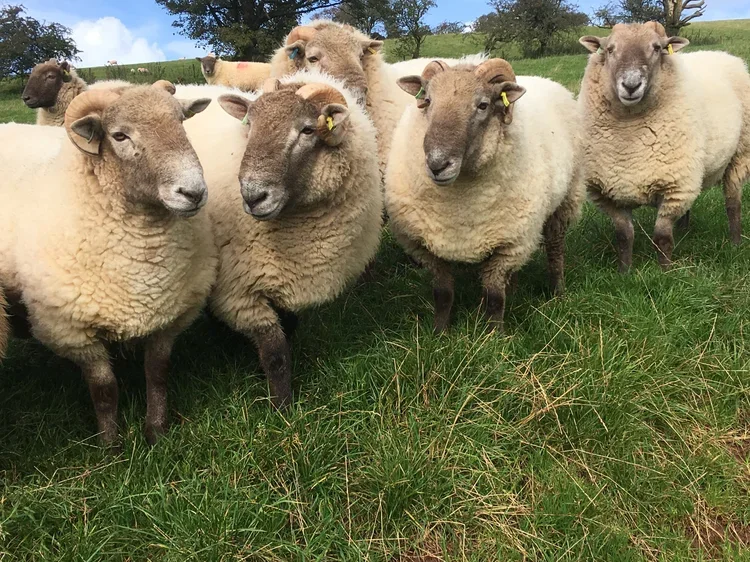
Rams are typically horned, although naturally polled individuals do occur, while ewes are always polled. The breed is distinguished by its grey to grey-tan head and legs, which are entirely free of wool. The muzzle is usually lighter — almost off-white — and often becomes paler with age. This distinctive colouring sets the breed apart from most other British breeds.
For a hill sheep, it is notably substantial, combining good body length with width through the hindquarters, and standing on well-set legs with strong bone. Hardy, thrifty and efficient foragers, they are well suited to challenging environments while remaining easy to manage.
Ewes
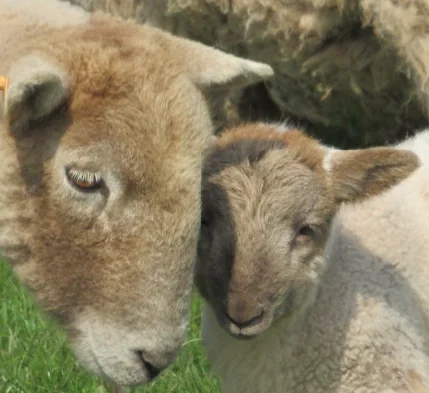
Hill Radnor ewes are renowned for their strong maternal instinct and excellent mothering ability, combined with an unusually docile temperament for a hill breed. Lambs are born vigorous, well coated and quick to thrive. While lambing percentages vary with management and environment, on good ground they can readily average 150% or more.
On lowland and improved pasture, lambs are capable of reaching good weights at an early age. In their native environment, they are typically later finishing, naturally fattening from late autumn into winter. This makes them particularly well suited to the hogget and farm shop market. The breed has also long been valued for producing quality mutton — a trait that remains relevant as consumer tastes continue to evolve.

The Show Ring
The breed competes successfully in the show ring against a wide range of sheep, including hill, lowland, rare and continental breeds. Notably, a five-year-old Hill Radnor ram was awarded Supreme Champion at the Royal Welsh Show in 2011, demonstrating both outstanding quality and longevity.
Fourteen shows now schedule dedicated Hill Radnor classes, ranging from major fixtures such as the Royal Welsh to smaller local and village shows. Breeders have also enjoyed considerable success in interbreed and mixed-breed classes throughout the country.
The Hill Radnor has proven highly successful in young handler competitions also and is increasingly sought after for these classes, thanks to its quality, presence and notably docile temperament — making it an excellent choice for aspiring young exhibitors.
Conservation
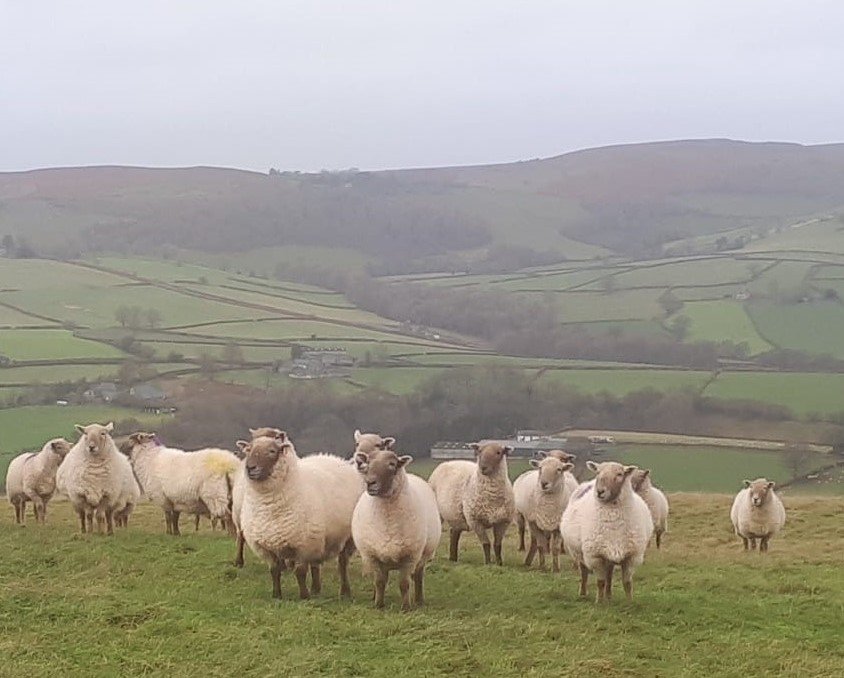
Conservation grazing is an increasingly popular use for the Hill Radnor. Several wildlife trusts across the country now employ the breed for this purpose, thanks to its hardiness, thriftiness, and ability to thrive on unimproved pasture. With growing interest in land management, heritage farming, conservation, and traditional agricultural practices, the Hill Radnor is well suited to a wide range of environmentally focused projects.
The Hill Radnor possesses a range of valuable qualities that position it strongly for the future, particularly as farming fashions and market demands continue to evolve. In an era where easily managed, efficient sheep are increasingly sought after, the Hill Radnor stands out as a natural and traditional choice. It has the size, conformation and strong breeding characteristics to perform well in commercial and pedigree systems. Its qualities are especially evident when crossed, where it contributes hardiness, sound structure and productivity — enabling it to compete confidently in the wider commercial marketplace.